INSIGHTS

Notes on commodity exposure, P&L and risk

Short pieces from the team that builds and implements TransRisk — on exposure consolidation, P&L measures, margin analytics and risk governance. Published here first, then shared on our social channels.

Latest posts

Four P&L measures calculated from one dataset

· Ravi Chandra Nutakki

Why your four P&L measures disagree

Open MtM, Margin P&L, Closed P&L and Realised P&L will not agree with each other on any given morning. That is not an error. It is the point.

Each answers a different question. Open MtM values what you still hold at today's prices. Margin P&L is the structural margin your plant actually earns on conversion, from real inventory costs and yields. Closed P&L covers positions matched against sales commitments but not yet dispatched. Realised P&L is the ground truth on what has shipped and settled.

The trouble starts when four teams each quote one of them and call it "the P&L". Finance reports realised. Procurement watches closed. Risk watches open MtM. Operations wants margin. Everyone is right, and the weekly review becomes a reconciliation argument instead of a decision.

The fix is not picking a winner. It is calculating all four from one dataset every morning, so the differences are explainable rather than suspicious. When the numbers share a source, the conversation moves from whose number is right to what to do about it.

Read the discussion on LinkedIn  →
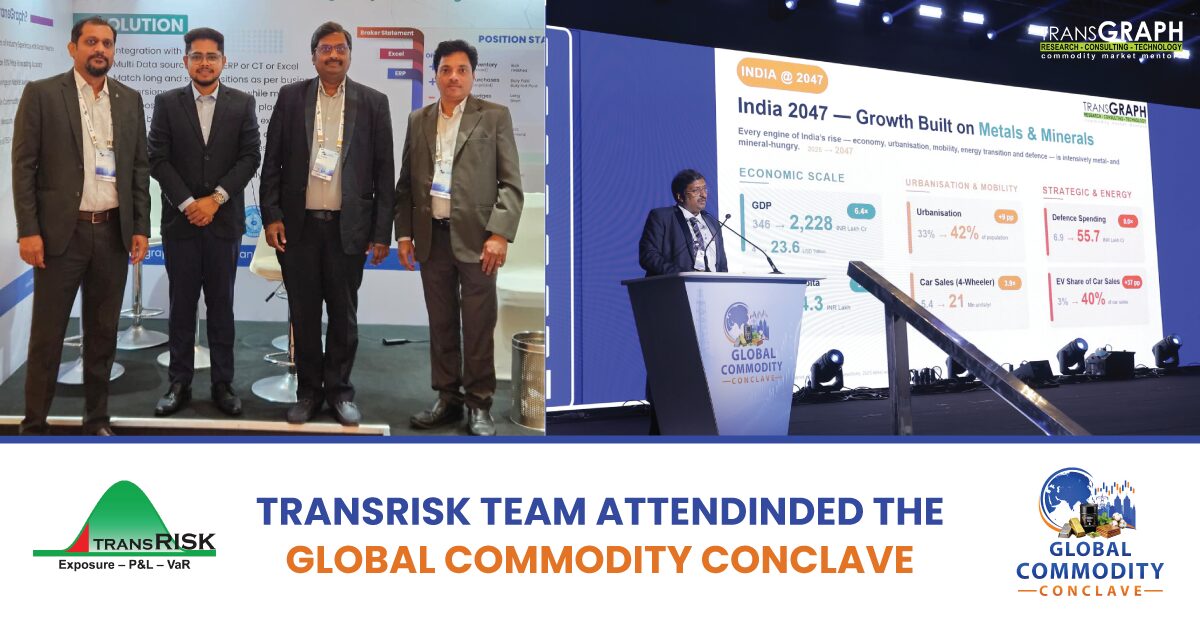
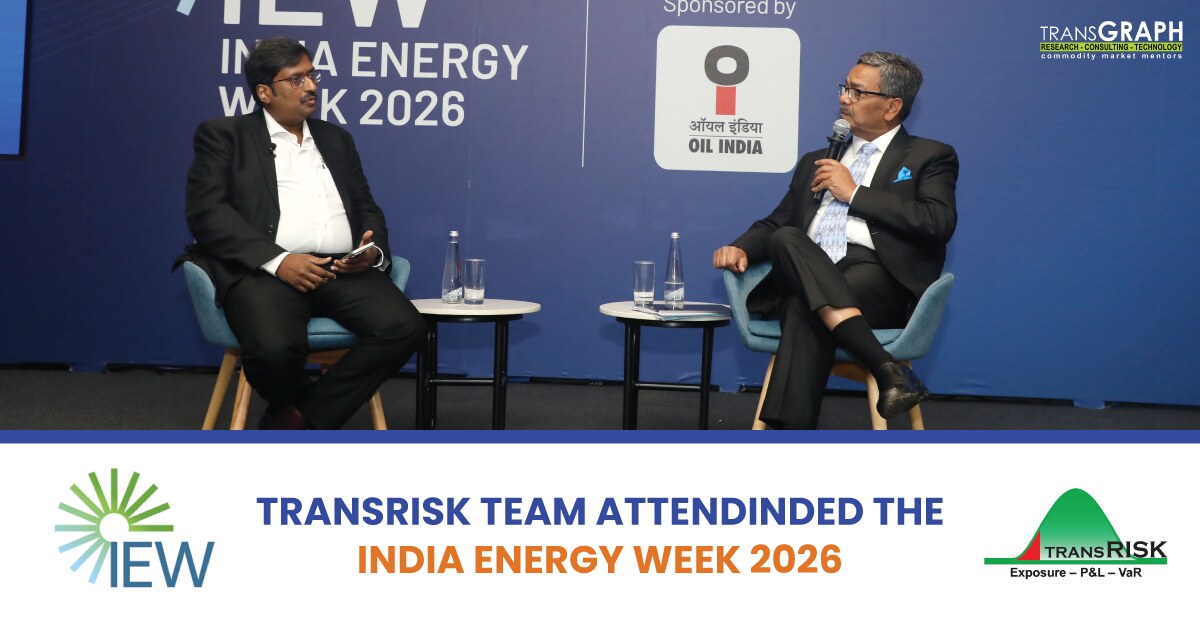
The TransRisk team at the Global Commodity Conclave, beside a session on India's metals and minerals demand to 2047

· Ravi Chandra Nutakki

TransRisk at Global Commodity Conclave 2026

TransRisk was showcased at the Global Commodity Conclave 2026, where our team presented the platform’s end-to-end commodity risk management capabilities to risk, procurement and finance professionals.

The discussion focused on a common challenge for commodity-intensive organisations: exposure, procurement, inventory, pricing and hedge information often sits across disconnected systems and spreadsheets. This limits visibility, increases manual effort and can delay critical commercial decisions.

TransRisk helps organisations bring these processes together through a unified platform for commodity exposure management, hedging and reporting. The platform supports teams in consolidating physical and financial positions, monitoring market exposure and strengthening risk governance across the business.

Key capabilities include: * Visibility of physical and financial commodity positions * Exposure monitoring by commodity, location, counterparty group and period * Hedge planning, coverage analysis and hedge-effectiveness tracking * Mark-to-market valuation and realised/unrealised P&L analysis * Role-based dashboards and reporting for procurement, treasury, finance, risk and leadership

A key takeaway from the conclave was that commodity risk management is increasingly a cross-functional responsibility. Procurement, trading, supply chain, finance, treasury and leadership teams need a common, reliable view of risk to make timely and informed decisions.

As market volatility and supply-chain uncertainty continue to affect commodity-intensive businesses, organisations need stronger tools to identify exposure early, assess potential financial impact and act within defined risk policies.

TransRisk enables this transition—from fragmented data and reactive reporting to connected risk intelligence, disciplined hedging and decision-ready insights. We thank the organisers of the Global Commodity Conclave 2026 and all the industry professionals who engaged with us during the event.

Read the discussion on LinkedIn  →
Manual morning consolidation timeline against an automated overnight cycle

· Ravi Chandra Nutakki

The two-hour morning nobody budgets for

Ask a commodity risk team what time their day starts and the honest answer is often two hours before anyone reads a number.

Positions come out of the ERP. Broker statements arrive as PDFs and get keyed in. Trading system exports land in a shared folder. Someone consolidates all of it into a workbook, checks a few totals against yesterday, and only then does the first report go out.

By the time it circulates, the market has moved. The report describes a book that existed at seven in the morning, and decisions get made against it in the afternoon.

Nobody budgets for this. It never appears as a line item, and the people doing it are usually the ones who understand the book best, which is precisely why it is expensive. The cost is not really the hours. It is that your most experienced analysts spend their morning assembling data instead of interpreting it.

The work is genuinely necessary. It just does not have to be manual.

Read the discussion on LinkedIn  →

See these ideas running on your own book.

A 45-minute session scoped to your commodity portfolio and reporting workflow.

Talk to an Expert